GST 2.0 in India: Simplified Tax, Surging Stocks
How recent GST cuts and slab rationalization could fuel consumption, cool inflation, and re‑rate India’s markets.
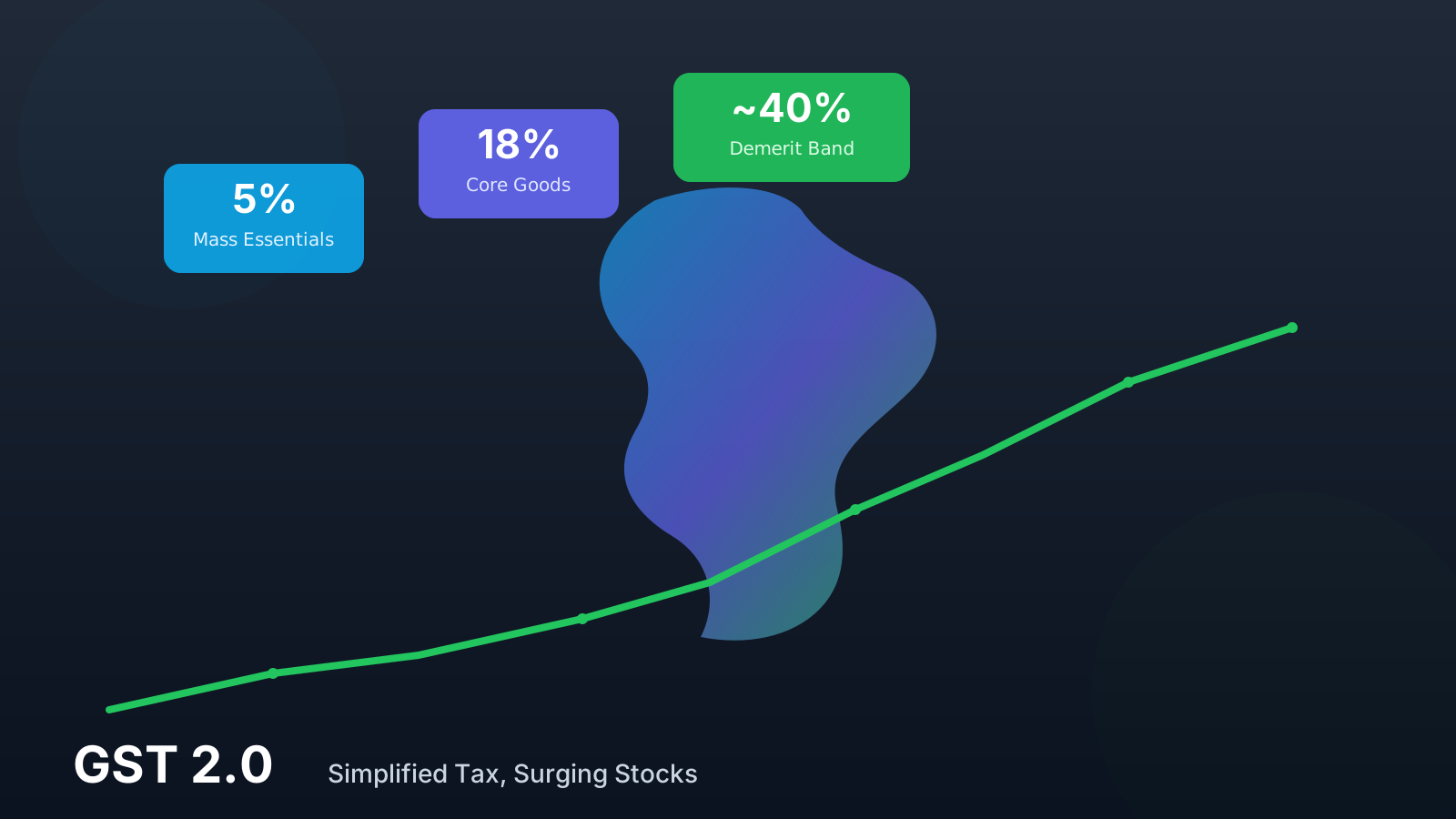
Executive Summary — GST 2.0 proposes moving from a multi‑slab GST to a simplified, consumption‑friendly framework. If executed swiftly and transparently, it could boost GDP, cool inflation, and re‑rate domestic demand sectors. If delayed or diluted, the near‑term “wait‑and‑watch” behavior may dent festive sales and state finances.
💡 Save this post: It’s designed as a handy reference with tables, FAQs, and a sector checklist at the end.
1) Executive Summary
India’s proposed GST reforms (popularly dubbed GST 2.0) target three outcomes:
- Simplification: Rationalize slabs to reduce classification disputes and compliance drag.
- Consumption push: Lower prices on mass products to stimulate demand.
- Credible fiscal path: Use targeted high rates on demerit goods and growth buoyancy to offset near‑term revenue loss.
What’s priced in? Markets are already discounting better volume growth in autos, durables, and housing‑linked plays. What’s not priced in? A longer approval cycle, muted pass‑through to consumers, and sharper‑than‑expected state revenue gaps.
“Good policy buys you time; great execution buys you growth.”
2) The GST Overhaul — What Actually Changes
2.1 From four (plus) slabs to two anchors
- Legacy:
0%,5%,12%,18%,28%(+ special rates for precious metals, etc.). - Proposed anchors: 5% and 18% as the dominant rates, with few preserved outliers (e.g., ~3% for precious metals) and a high demerit band (illustrative: ~40%) for ultra‑luxury/sin goods.
Why keep an ultra‑high band? To protect revenues while cutting mass‑market rates.
2.2 Product‑level implications (illustrative)
| Current Slab | Proposed Slab | Illustrative Items | Expected Street Take |
|---|---|---|---|
| 12% | 5% | Packaged foods (butter, ghee, juice), readymade garments (mid‑price) | Mass‑market price relief → FMCG volume tailwind |
| 28% | 18% | ACs, TVs, dishwashers, small cars (<4m), two‑wheelers | Discretionary revival; inventory clear‑out into festive |
| 28% → 18% inputs | 18% | Auto components, seats | Margin relief down the chain |
| Special: ~40% | ~40% | High‑end SUVs, tobacco, select luxury | Revenue backstop; targeted disincentive |
Note: Specific HS‑code mappings will decide the final incidence. Treat the above as a decision‑maker’s dashboard, not legal advice.
2.3 Why this is “2.0” (not 1.1)
- Simplifies classification vs. GST 1.0’s frequent disputes.
- Attacks inverted duties that lock working capital.
- Signals a path to potential GST 3.0: single‑rate ambitions, inclusion of petroleum/electricity, faster refunds, faceless assessment.
3) Macro & Politics — The Calculus
3.1 Growth & inflation
- GDP: A demand bump from lower prices; street estimates frame a +0.5–0.6 pp impulse over 2–3 years (illustrative).
- Inflation: Direct disinflation from lower indirect taxes; runway for RBI to maintain an accommodative stance if pass‑through is visible.
3.2 Fiscal tightrope
- Centre: One‑off slippage possible; partly cushioned by growth buoyancy, dividends, and asset sales.
- States: Revenue anxiety is real; expect asks on compensation formulae or revised sharing ratios.
3.3 Federal math — GST Council
- Voting: 1/3 Centre, 2/3 States/UTs; 75% weighted majority needed.
- Execution risk: A long approval arc can deepen the temporary demand pause.
4) The Two‑Sided Coin — Demand vs. Delay
4.1 The paradox of pre‑cut demand
Consumers delay purchases if they expect imminent price cuts (autos, TVs, ACs). Dealers carry inventory; financing costs rise. A swift, dated rollout can flip hesitation into front‑loaded demand.
4.2 Sector heatmap (who wins first?)
| Sector | First‑Order Impact | Second‑Order Effects | What to Track |
|---|---|---|---|
| Autos (ICE) | On‑road prices ↓, bookings ↑ | EV price gap narrows | OEM guidance, dealer inventory days |
| EVs | Relative price edge compresses | Adoption curves may flatten temporarily | Subsidy tweaks, small‑EV launches |
| Consumer Durables | Ticket sizes ↓ | Channel restocking, festive offers | Secondary sales, warranty attach |
| FMCG (Mass) | Elastic volumes ↑ | Mix/realization trade‑offs | Rural/offtake scanners |
| Housing/Real Estate | Cement/inputs ↓ if cut | Affordability ↑, launches ↑ | Pre‑sales, ready‑to‑move inventory |
| Financials | Retail loan demand ↑ | BNPL/PL prudence needed | Credit growth vs. asset quality |
5) Markets — Rerating Mechanics
- Volume effect: Lower GST → lower sticker price → higher volumes.
- Operating leverage: Fixed‑cost businesses see faster margin expansion.
- Multiple expansion: Policy clarity fuels confidence, reduces earnings dispersion.
Playbook: Favor high‑quality leaders with pricing power and clean channel checks; avoid names where pass‑through lags or state‑level execution risk is high.
6) Risks, Hurdles, Mitigants
- Profiteering risk: If businesses pocket the cut, consumers won’t feel it. Mitigant: tech‑driven monitoring, clear invoicing norms, and time‑bound audits.
- Council delays: Extended haggling → demand air‑pocket. Mitigant: hard effective dates; phased migration with advance guidance.
- Fiscal credibility: Watch deficit glide path and rating rhetoric. Mitigant: front‑loaded divestments, dividend buffers, and growth buoyancy.
- EV adoption: Narrower ICE–EV gap may slow entry‑EVs. Mitigant: targeted EV incentives where externalities are largest (fleet, last‑mile).
7) Actionable Checklist (CXOs & PMs)
- Run scenario GST incidence by SKU/variant; refresh MRP strategy.
- Align promo calendars with expected effective dates; plan two demand ramps (announcement, effective).
- Pre‑book credit lines for inventory bulges.
- Re‑negotiate channel terms (sell‑in vs. sell‑through incentives).
- Publish consumer‑facing pass‑through commitments to capture goodwill.
8) FAQ
Q1. Does GST 2.0 make everything cheaper?
A: No. The aim is to lower mass‑market rates while keeping a high demerit band intact. Net impact depends on your product’s HS code and value chain.
Q2. Is this inflation‑positive or negative?
A: Generally disinflationary if cuts are passed through. Short‑term distortions can occur around the effective date.
Q3. What about state revenues?
A: Expect tough negotiations. Durable reform will likely pair rate cuts with credible offsets.
Q4. Will EV adoption slow?
A: It may temporarily if ICE rates fall to 18% while EVs stay at 5%. Policy can rebalance with targeted EV support.
9) Data Cards (copy‑paste ready)
1
2
3
4
5
6
7
8
9
10
11
12
13
# Use in decks/notes
gst20:
  anchors: [5, 18]
  outliers:
    precious_metals: 3
    demerit_band: 40 # ultra‑luxury/sin, illustrative
  macro:
    gdp_bump_pp: 0.5-0.6
    inflation_effect: disinflationary_if_pass_through
  council:
    centre_weight: 0.33
    states_weight: 0.67
    threshold: 0.75
10) At‑a‑Glance Tables
10.1 Rate migration (illustrative)
| Bucket | Old | New | Consumer Read | Business Read |
|---|---|---|---|---|
| Essentials | 12% | 5% | Cheaper staples | Working capital relief |
| Durables | 28% | 18% | Big‑ticket affordability | Channel destocking/ramp |
| Autos (small) | 28% | 18% | On‑road prices ↓ | OEM mix strategies |
| Ultra‑luxury/sin | 28%+ | ~40% | No relief | Fiscal backstop |
10.2 Sector scorecard
| Sector | Demand | Margins | Valuation | Comment |
|---|---|---|---|---|
| Autos (2W/Entry PV) | ▲▲ | ▲ | ▲ | Early cycle winner |
| Consumer Durables | ▲▲ | ▲ | ▲ | Festive kicker likely |
| FMCG (Mass) | ▲ | → | → | Volume over value |
| Cement/Materials | ▲ | → | → | Project pipeline key |
| EVs | → | → | → | Watch policy fine‑tuning |
Legend: ▲▲ strong tailwind · ▲ tailwind · → neutral · ▼ headwind
11) Investor’s Field Notes
- Don’t chase gap‑ups blindly; wait for inventory & pricing commentary in management calls.
- Cross‑check pass‑through in consumer bills and channel invoices.
- Track Council timelines; policy dates matter more than headlines.
12) Conclusion
If GST 2.0 lands cleanly—simple slabs, fast pass‑through, honest communication—India gets a stronger consumption flywheel and sturdier market multiples. If not, the air‑pocket before the festive season will show up in sales, spreads, and sentiment. The window is open; execution decides how much wind we catch.
📌 References & Further Reading
This section is a holder for official notifications, Council minutes, and brokerage primers you follow. Replace bullets with live links as the framework is notified.
- GST Council press statements & FAQs (official).
- Finance Ministry notifications and CBIC circulars.
- Brokerage primers on GST rationalization (Emkay, UBS, Nomura, Jefferies, CLSA, etc.).
- Ratings agency commentaries (Moody’s, S&P, Fitch).
Disclaimer: This post is for educational purposes. It is not tax or investment advice. Please consult a professional for your specific case.